
interface in Chemistry
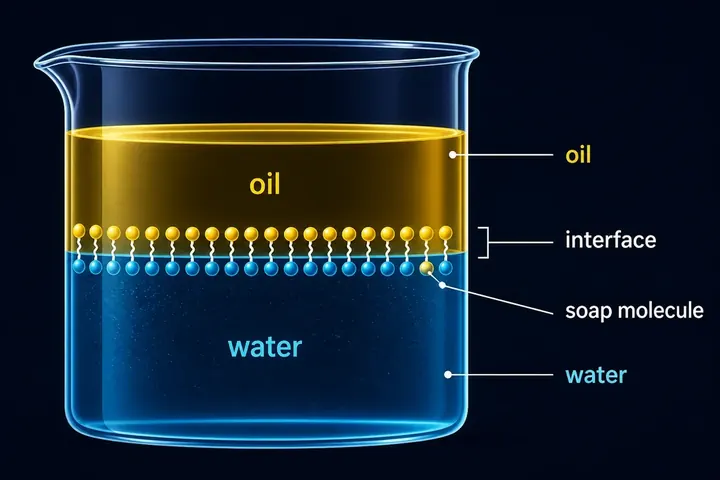
The boundary surface separating two phases, such as solid–liquid, liquid–gas or two immiscible liquids.
Many processes happen only at an interface: adsorption, catalysis and electrode reactions. A larger interface area usually means a faster process.
Meaning in your language
अंतरापृष्ठ: दो प्रावस्थाओं (जैसे ठोस-द्रव, द्रव-गैस) को अलग करने वाली सीमा सतह
अनेक प्रक्रम केवल अंतरापृष्ठ पर होते हैं: अधिशोषण, उत्प्रेरण और इलेक्ट्रोड अभिक्रियाएँ। अंतरापृष्ठ का क्षेत्रफल जितना बड़ा, प्रक्रम प्रायः उतना ही तेज़।
سطح بيني: السطح الفاصل بين طورين مثل صلب–سائل أو سائل–غاز أو سائلين غير ممتزجين
تحدث عمليات كثيرة عند السطح البيني فقط: الامتزاز والحفز وتفاعلات الأقطاب. وكلما كبرت مساحة السطح البيني كانت العملية غالبًا أسرع.
interface : surface de séparation entre deux phases (solide–liquide, liquide–gaz, deux liquides non miscibles)
De nombreux processus n'ont lieu qu'à une interface : l'adsorption, la catalyse et les réactions aux électrodes. Plus l'aire de l'interface est grande, plus le processus est généralement rapide.
antarmuka (bidang batas): permukaan batas yang memisahkan dua fase, seperti padat–cair atau cair–gas
Banyak proses hanya terjadi di antarmuka (bidang batas fase): adsorpsi, katalisis, dan reaksi elektrode. Luas antarmuka yang lebih besar biasanya berarti proses yang lebih cepat.
界面:分隔两相(如固-液、液-气或两种不互溶液体)的边界面
许多过程只在界面上发生:吸附、催化和电极反应。界面面积越大,过程通常越快。
Examples
- Adsorption is a surface phenomenon that takes place at the interface between two phases.
- In a glass of oil and water, the flat line where the two liquids meet is an interface.
Everyday meaning
the screen, buttons or system through which a person uses a device or program