
form in Biology
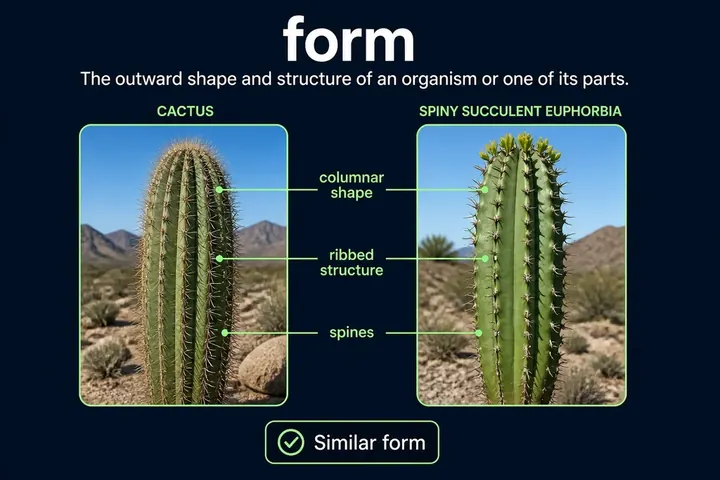
The outward shape and structure of an organism or one of its parts.
In biology, form means what an organism or organ looks like and how it is built. Form usually suits function: a thin, flat leaf is well shaped for catching light.
Meaning in your language
रूप — किसी जीव या उसके अंग की बाहरी आकृति और संरचना
जीव विज्ञान में रूप का अर्थ है कि कोई जीव या अंग कैसा दिखता है और कैसे बना है। रूप प्रायः कार्य के अनुरूप होता है: पतली, चपटी पत्ती प्रकाश ग्रहण करने के लिए उपयुक्त आकार की होती है।
الشكل — الهيئة والبنية الخارجية للكائن الحي أو لأحد أجزائه
في علم الأحياء يعني الشكل هيئة الكائن أو العضو وطريقة بنائه. وغالبًا ما يلائم الشكلُ الوظيفةَ: فالورقة الرقيقة المسطّحة مُهيّأة جيدًا لالتقاط الضوء.
forme — aspect extérieur et structure d'un organisme ou d'un de ses organes
En biologie, la forme désigne l'aspect d'un organisme ou d'un organe et la façon dont il est construit. La forme est généralement adaptée à la fonction : une feuille fine et plate est bien conçue pour capter la lumière.
bentuk — rupa dan struktur luar suatu organisme atau bagiannya
Dalam biologi, bentuk berarti rupa suatu organisme atau organ dan cara penyusunannya. Bentuk biasanya sesuai dengan fungsi: daun yang tipis dan pipih cocok untuk menangkap cahaya.
形态——生物体或其器官的外部形状与结构
在生物学中,形态指生物或器官的外观及其构造方式。形态通常与功能相适应:薄而扁平的叶片正适合捕获光能。
Examples
- Morphology studies the external form of plants, such as the shape of their roots, stems and leaves.
- Cacti have a leafless, fleshy form that helps them store water in the desert.
Everyday meaning
an official paper or web page with spaces where you write information